Coastal Stories Mural Complete: Guadalupe, CA
The Coastal Stories Mural amplifies the voices and history of underrepresented communities in Guadalupe, CA- from the Chumash to the Mixtecs. The mural is commissioned by the Dunes Center and Coastal Consersancy for Guadalupe, CA
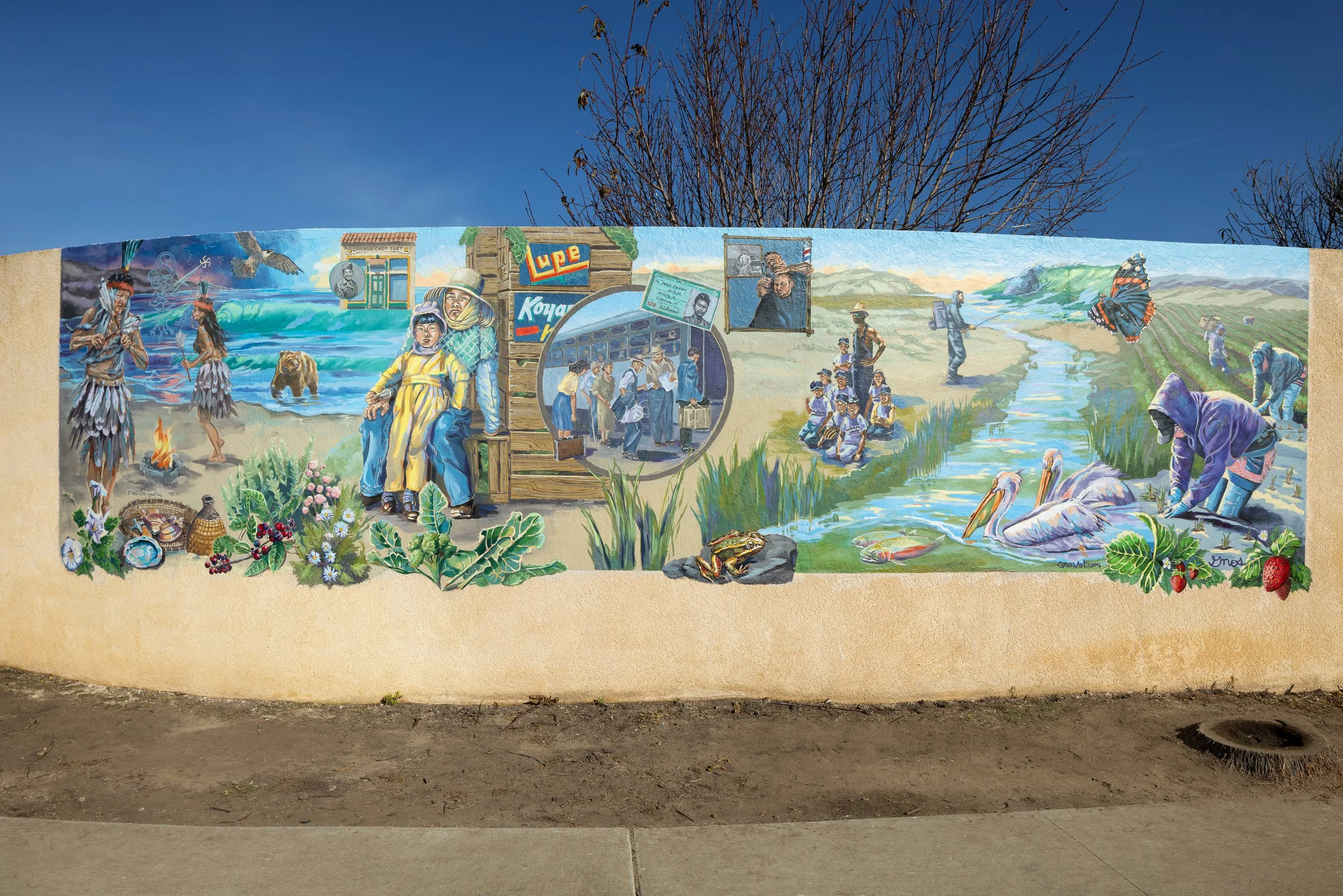
Mural installed. Photo by Elliott Johnson
As is my habit with historical projects, I did a lot of research for this mural. With the help of filmmaker Chachi Ramirez and the Dunes Center team—Erika Weber and Garrett Matsuura—I was able to conduct community interviews, watch all the interviews Chachi had already done (there's a wonderful film that goes along with this project), visit the Chumash Indian Museum and Guadalupe Historical Center, and see a sundial replica of a 200-year-old arborglyph found in San Luis Obispo County. I pored through old photos in books and online. I consulted with Chumash expert Levi Zavalla. I visited a strawberry farm where the workforce was predominantly Mixtec. I listened to podcasts and watched interviews about the Japanese internment after Pearl Harbor was bombed. With all of this information, I wove together a story that gives voice to the untold history of Guadalupe from the families who live there.
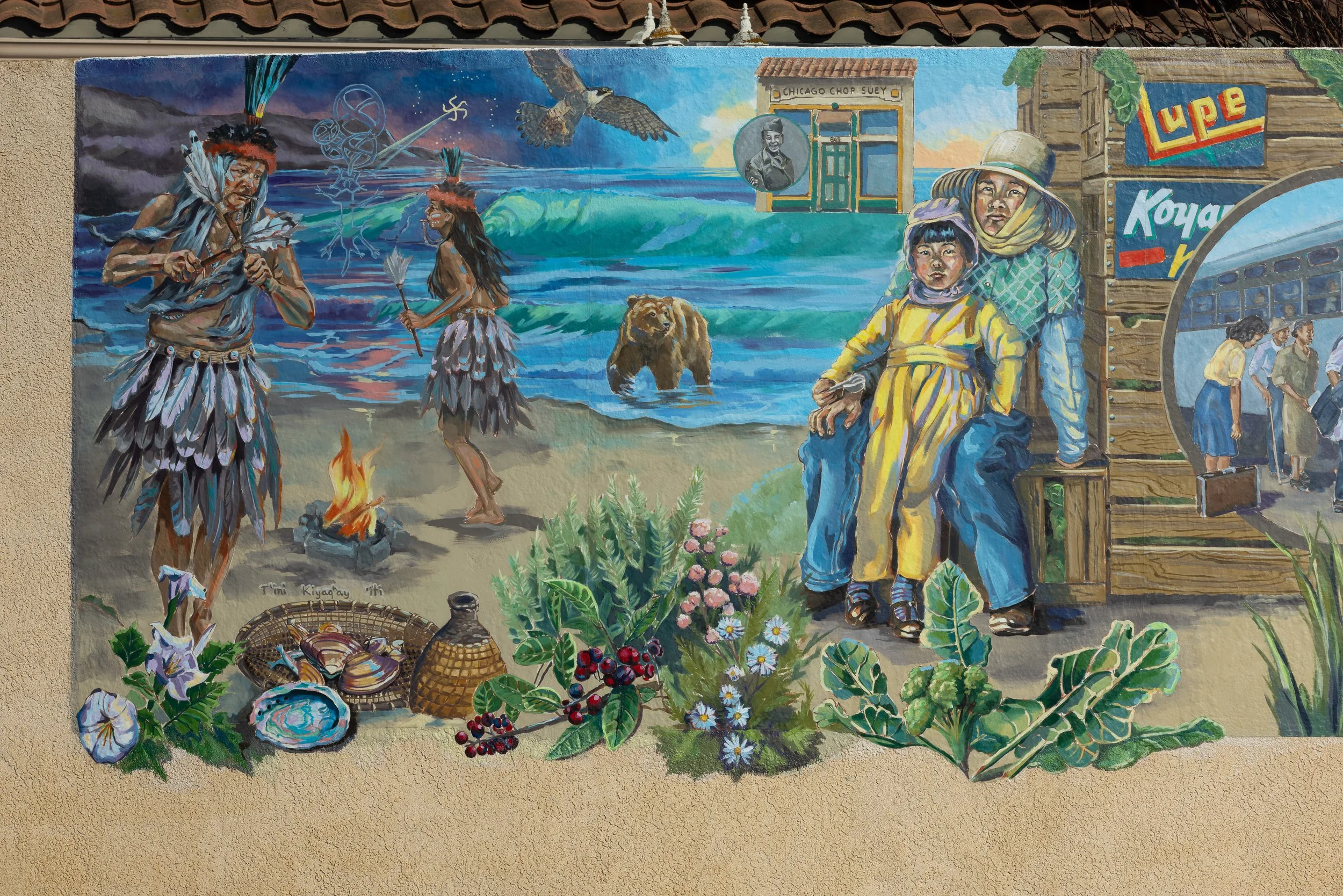
L to R: Chumash Barracuda dance, Chinese-American presence and Japanese-American farmers in Guadalupe, CA
I started with the Chumash, whose village "Amuwun" was there first (though there were likely people before them). I decided to paint the Barracuda Dance and included an arborglyph—a tree carving that the local Guadalupe Chumash family was involved in discovering and interpreting. It's a sophisticated sundial and calendar of the equinoxes and solstices that correlates with the positions of Ursa Major. In the mural, I painted the positions of Ursa Major around Polaris (the North Star) and how it connects to the calendar in the arborglyph. Please watch this short video, Chumash Science Through Time, to get the full backstory on the arborglyph.
Besides hunting and gathering, the Chumash were astronomers and scientists, and I wanted to portray them as such. I placed the dancers at Mussel Point, where you can still find fresh waterfalls trickling through the dunes out to sea. I imagined and painted abundant Pismo and Razor clams, a grizzly, and medicinal herbs around them—Coffeeberry, Coastal Sage (weh weh), Aster, and Dune Buckwheat. I learned that there were no black bears in California until the last grizzlies were wiped out. Did you know the bear on the California flag is a grizzly? I didn't.
Next to the Chumash dancers, I painted Bud Wong, a descendant of the Wong family who arrived in Guadalupe in the 1890s. He later became mayor and city councilman. The iconic Chicago Chop Suey restaurant was the destination for the best Chinese food around and opened in the early 1900s. Although it closed in 1998, you can still see the façade today in downtown Guadalupe.
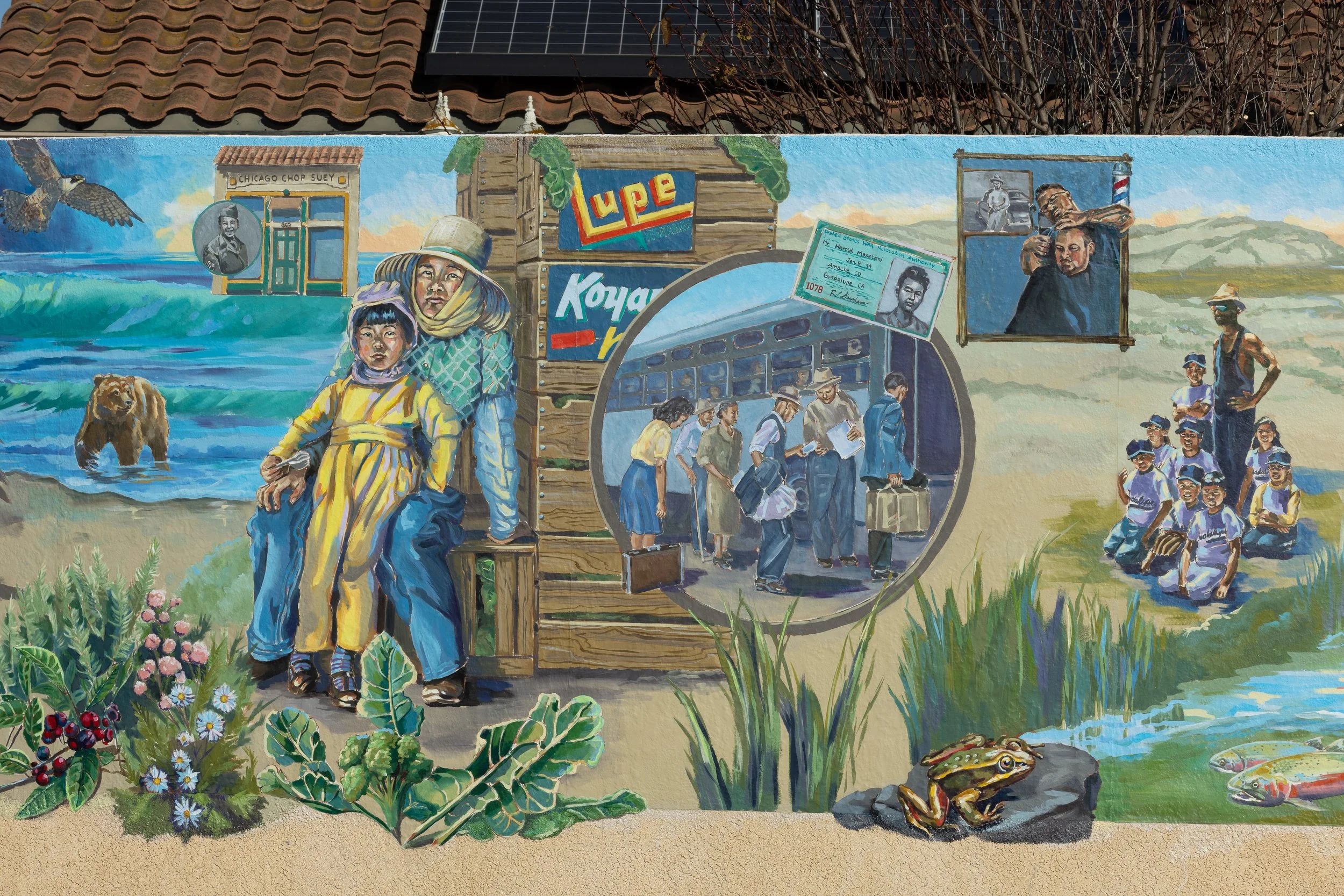
L to R: Japanese farming, Internment and local families.
To the right, I painted the Japanese-American farming industry. Many arrived from Japan in the 1890s, worked at the Union sugar beet factory in Betteravia, and went on to purchase or rent land, sharecrop, and start farms and families of their own. I painted two notable produce labels on the broccoli crates behind the image of a mother and her daughter taking a break from harvesting broccoli, based on a photo taken by Dorothea Lange during the 1930s.
When Pearl Harbor was bombed in WWII, the entire Japanese-American community had only 48 hours to sell everything before being evacuated to internment camps, and farms owned by Japanese Americans were sold for a few cents on the dollar to white farmers. Many Guadalupe residents signed their land over to Puritan Ice Company, who was supposed to hold their land in trust while they were interned, only to return home and be told that Puritan Ice Co. would not be returning their land to them. I chose to paint a scene of the Japanese-American community boarding a Greyhound bus to be driven to internment camps.
I imagined and painted Harry Masetani's War Relocation ID with the permission of his children. Harry would have been around 16 years old when he went to camp. Many know of Masetani Market, a mainstay in Guadalupe. Harry recently passed in 2025. He was in his 90s.
To the right, I painted local historian, former city councilman, and barber Gilbert Robles, who helped me understand how the Filipino community arrived and became the labor force in Guadalupe. I painted beloved coach, teacher, and mentor Joe Harris with his baseball team. Joe's family was involved with the education system in Guadalupe for decades.
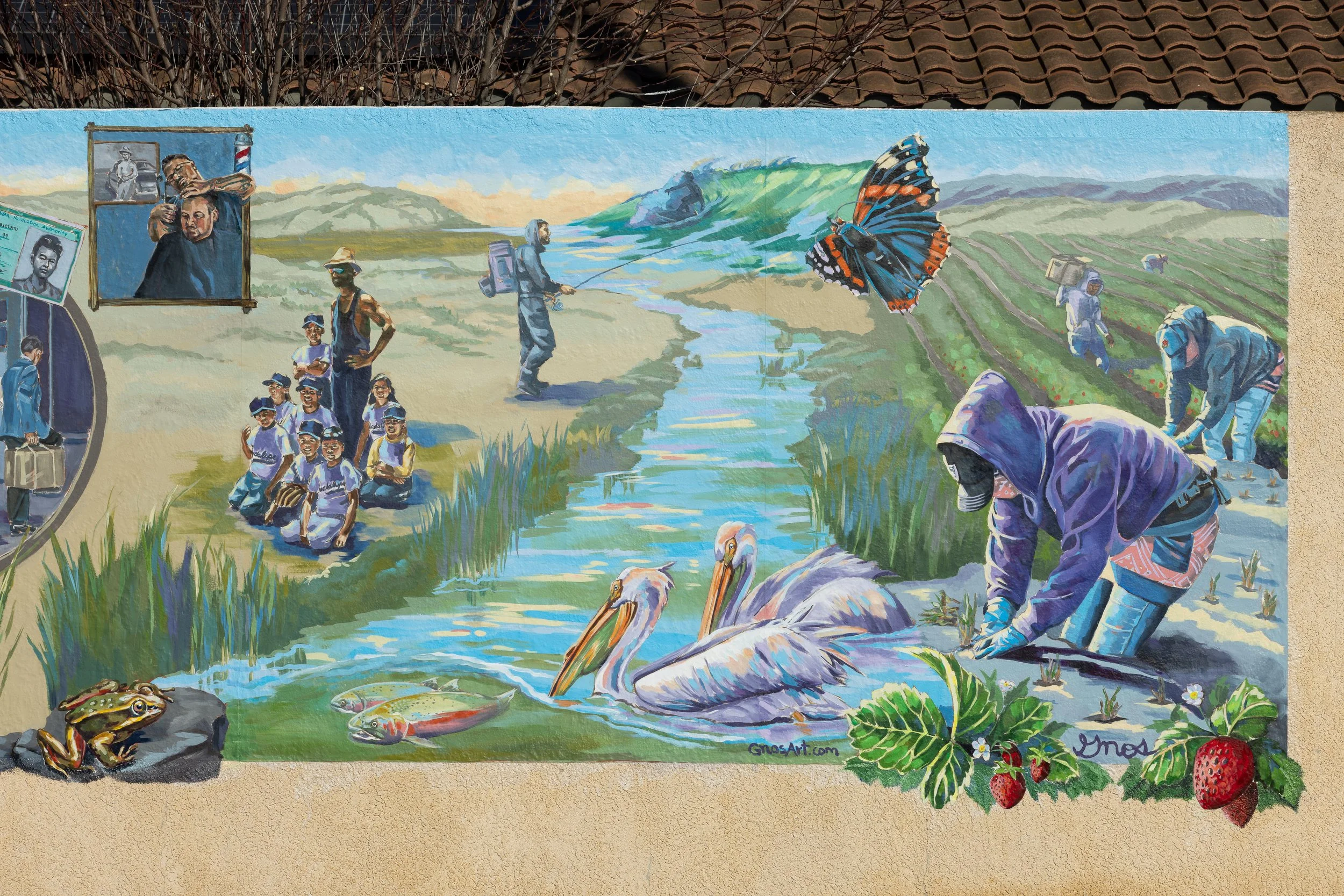
L to R: Gilber the Barber, Joe the coach, Jonathan the fisherman, Shai the surfer, strawberry planters: all wonderful parts of Guadalupe’s diverse community. Within this composition, I added in the steelhead, red legged frog and white pelicans of the Guadalupe dunes complex.
In this right portion of the mural, I painted local perch fisherman Jonathan, local surfer Shai Olivares, and the ecosystem found near the Santa Maria River mouth in Guadalupe. You can find steelhead trout, red-legged frogs, tule grass, white pelicans, and Red Admiral butterflies there. The predominant labor force in Guadalupe is the Mixtec population, with origins in Oaxaca. Guadalupe is surrounded by strawberry fields, and I was fortunate to visit a strawberry farm and paint some of the workers into the mural.